Real-time rooms infrastructure
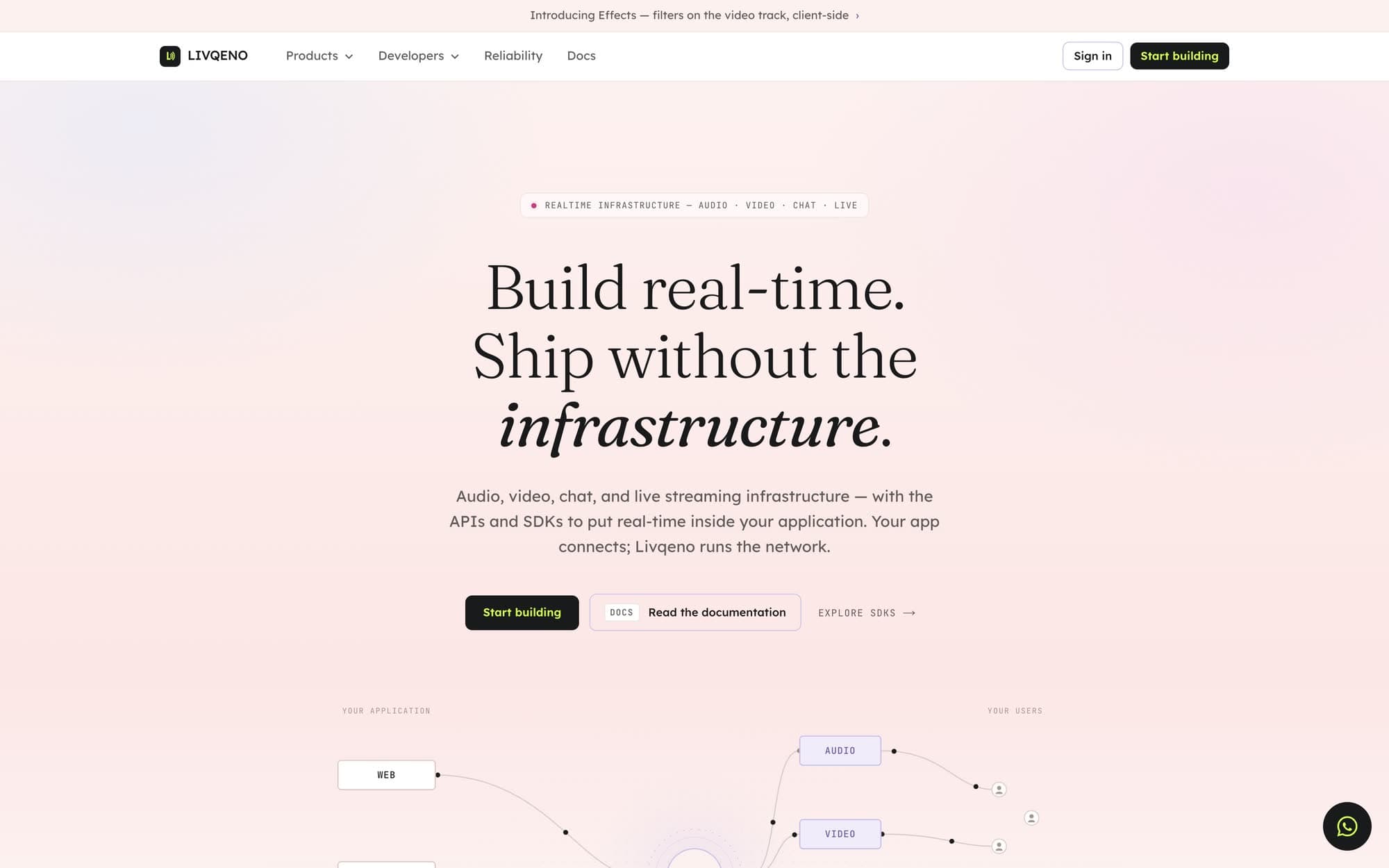
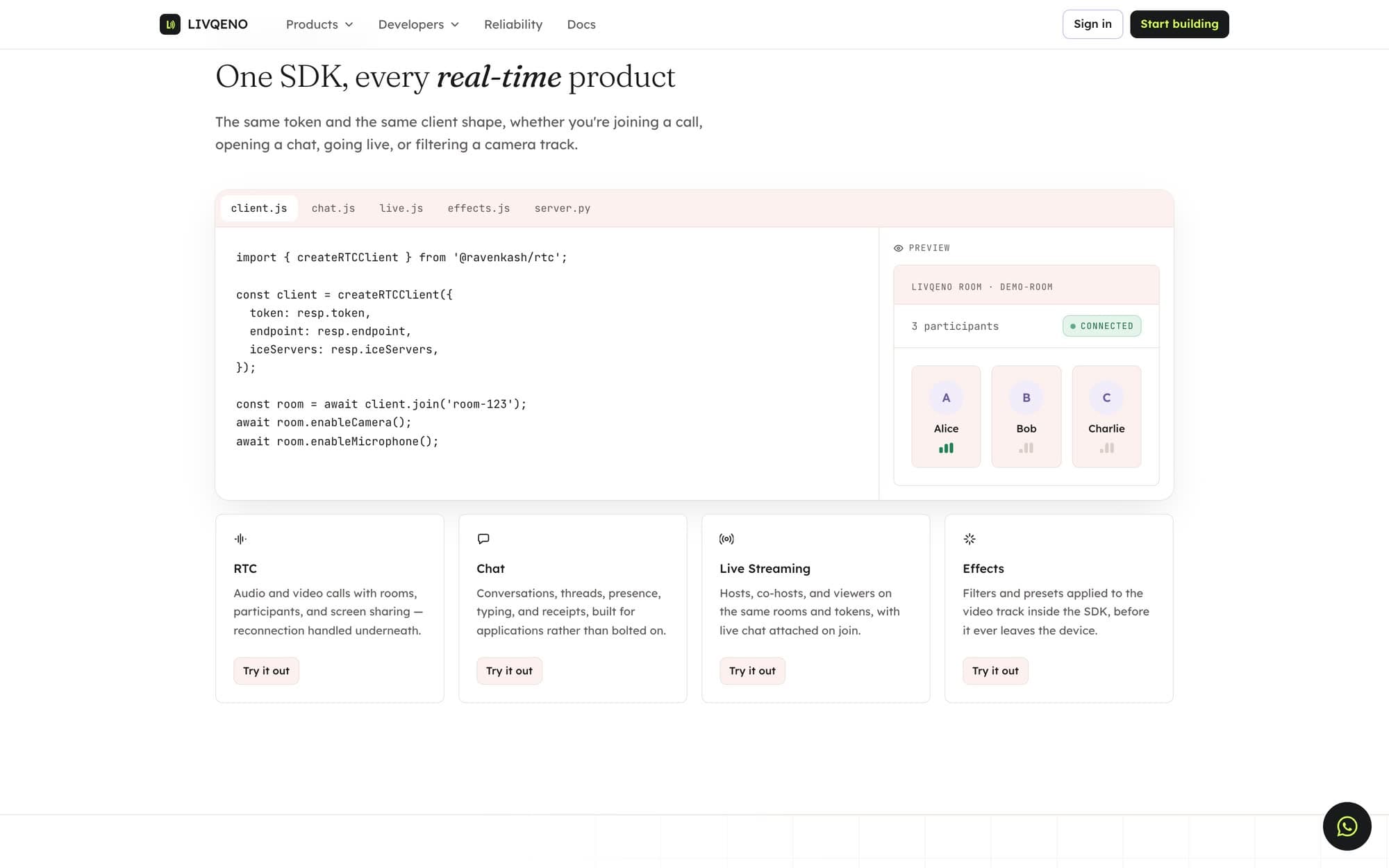
Real-time rooms as infrastructure — an API for live video and audio, with the diagnostics to see what your rooms are actually doing.
The hard part
Anyone can ship a demo room. Running other people's rooms means every failure is someone else's outage, so the observability has to be better than the feature.
A live-rooms stack packaged as something other developers build on.
What's in it
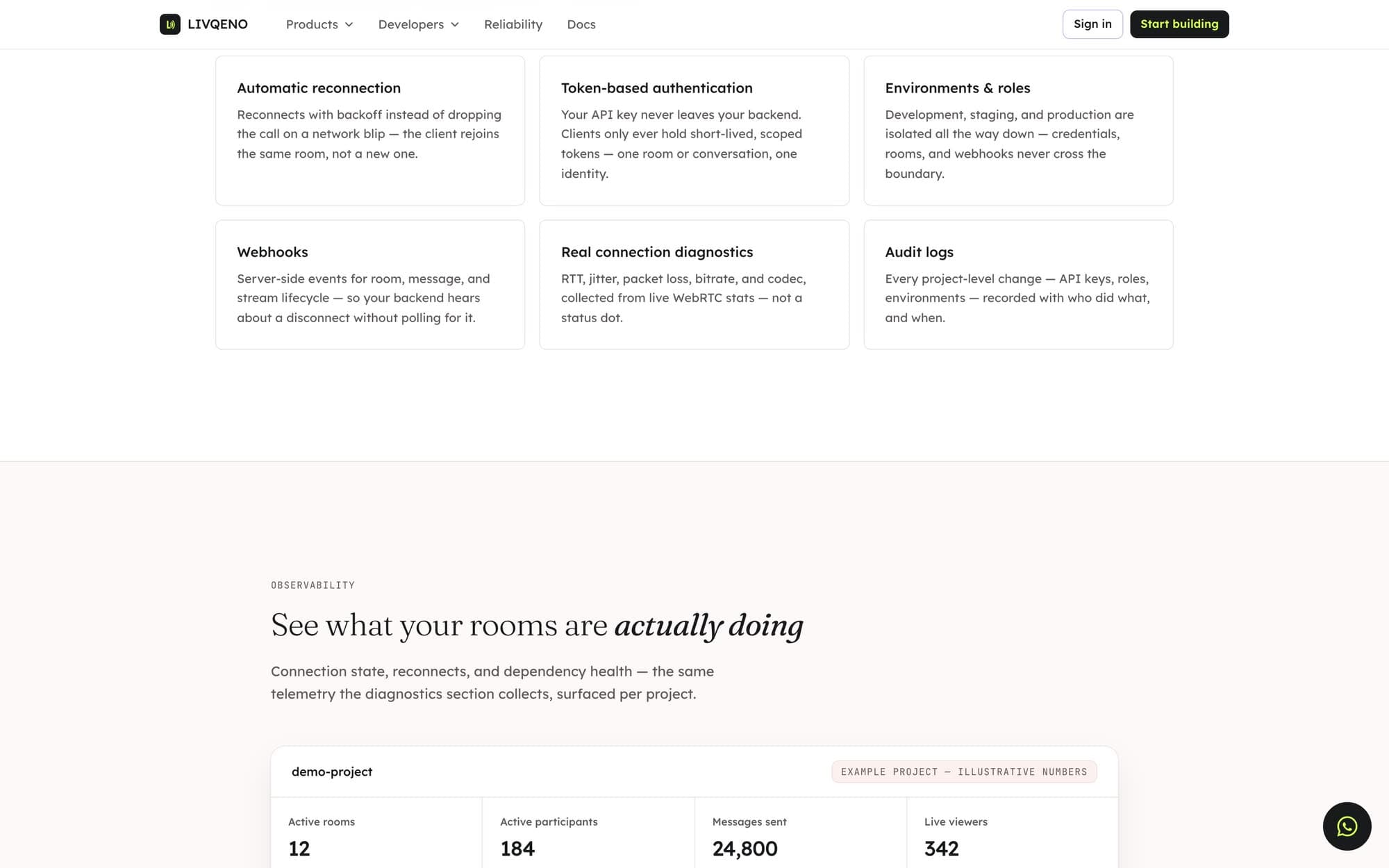
- Automatic reconnection with backoff — a call resumes on a network blip instead of dropping, and the client rejoins the same room rather than a new one
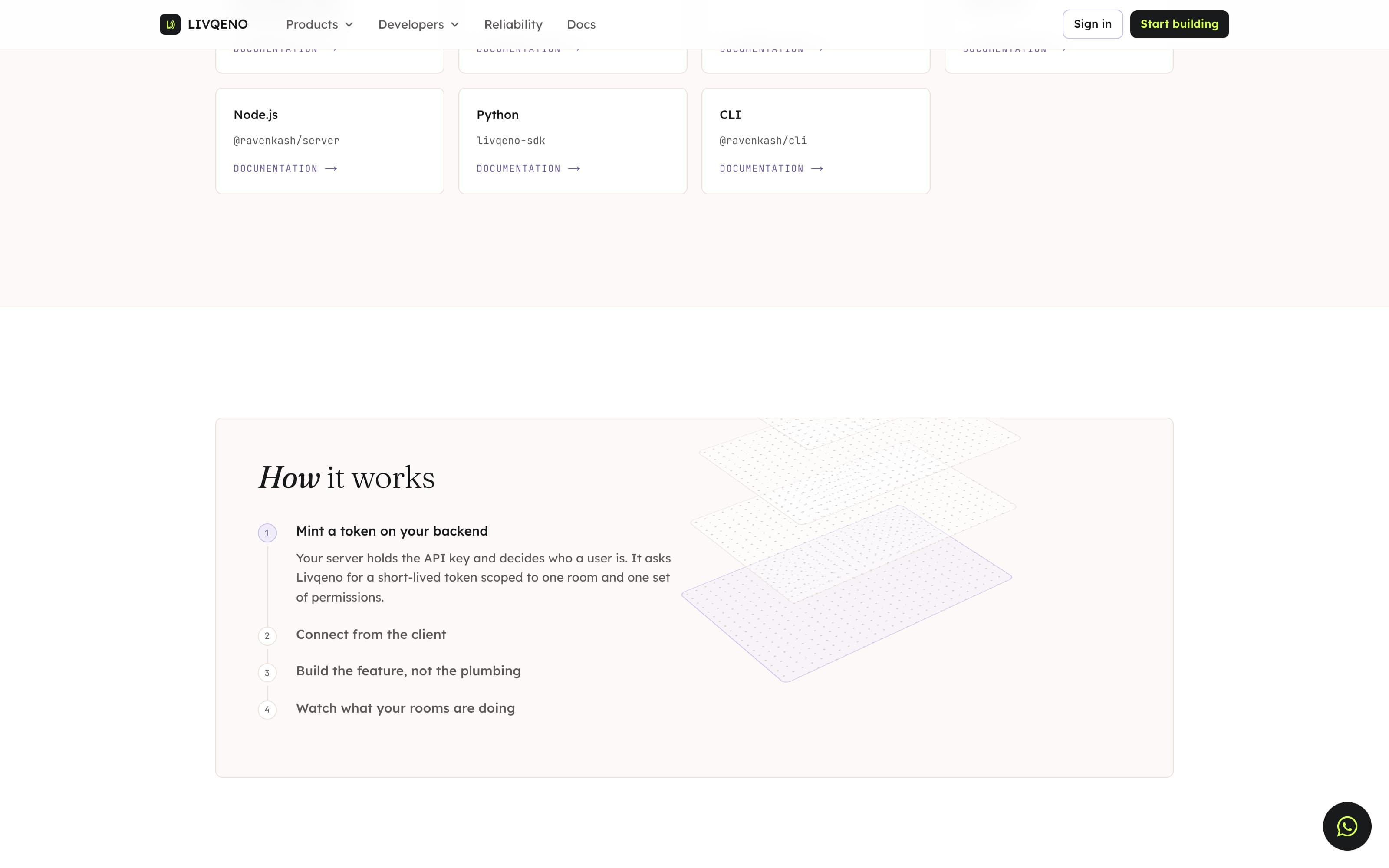
- Token-based authentication — API keys never leave the backend; clients only ever hold short-lived, scoped tokens for one room
- Environments and roles — development, staging and production separated all the way down, with credentials, rooms and webhooks never crossing the boundary
- Webhooks for room, message and stream lifecycle, so a backend hears about a disconnect without polling for it
- Real connection diagnostics — RTT, jitter, packet loss, bitrate and codec, collected from live WebRTC statistics rather than a status dot
- Audit logs — every project-level change recorded with who did what, and when
What made it hard
The product is not the video path, it is everything around it. Hosting other people's real-time rooms means inheriting their worst networks and their hardest debugging sessions. The diagnostics and audit surfaces exist because "it didn't connect" is otherwise unanswerable.
More of the hard parts.
All work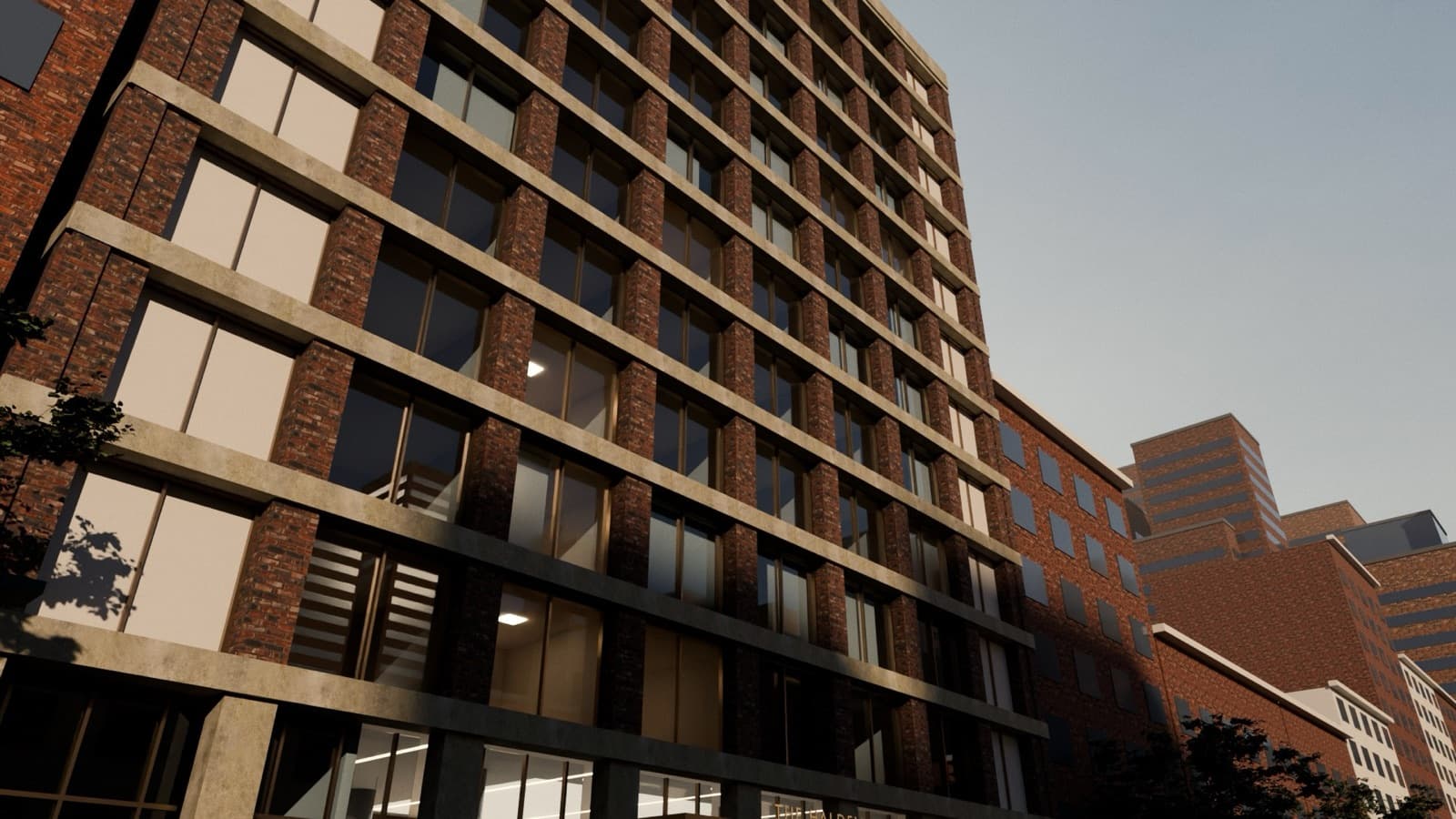
The Halden: a photoreal launch site
A launch site for a fictional Brooklyn tower: scroll from the street to Residence 9C, then watch the sun set behind the glass.

VARNIKA: a skincare launch film
A 20-second launch film for VARNIKA, a skincare line we designed and built end to end in 3D: a rose serum, a night cream and one continuous shot.